Beechcroft St Paul'sC of E Primary School
Geography
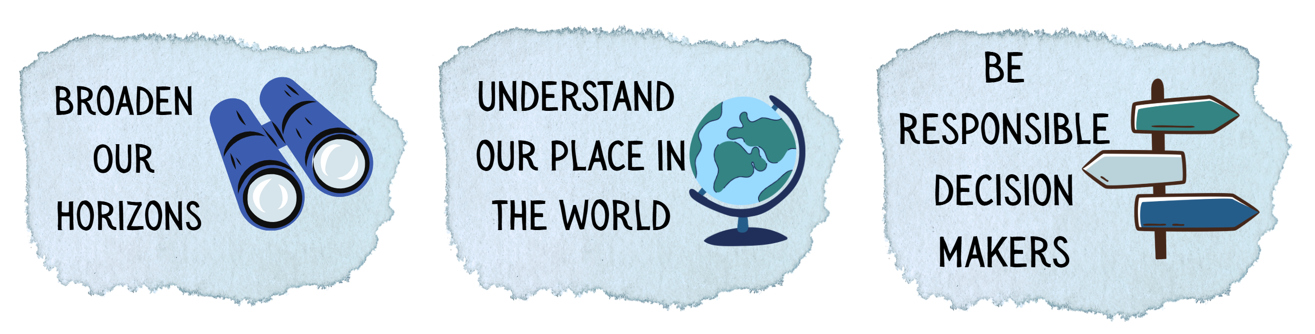
At Beechcroft St Paul’s, our geography curriculum helps children develop a deeper understanding of the world around them. Through the study of places, people, environments and the Earth’s physical processes, children learn how the world is connected and how human actions can shape the environment. Geography encourages curiosity about the planet and helps children develop the knowledge and skills needed to understand both their local area and the wider world. Our geography curriculum supports our curriculum drivers by helping children broaden their horizons, understand their place in the world, and become responsible decision makers.
Broadening Our Horizons
Through geography, children explore a range of places, environments and cultures from around the world. By learning about different countries, landscapes and communities, children develop a broader understanding of the diversity of our planet.
Fieldwork and enquiry-based learning allow children to investigate both their local area and more distant locations. This helps them make meaningful connections between their own experiences and the wider world, encouraging curiosity and a greater awareness of global issues such as climate, sustainability and environmental change.
Understanding Our Place in the World
Geography helps children develop a strong sense of place and belonging. By learning about their local environment and community, children begin to understand how their surroundings shape their lives.
As they explore other regions of the world, children also learn how different environments, cultures and resources influence how people live. This helps them recognise the connections between people, places and the natural world, and encourages respect for both local and global communities.
Becoming Responsible Decision Makers
Geography supports children in understanding how human choices can affect the environment and the future of our planet. Through learning about topics such as climate change, sustainability and the use of natural resources, children begin to understand the importance of caring for the Earth.
Children are encouraged to think critically about environmental challenges and consider how individuals and communities can make positive choices. This helps them develop a sense of responsibility for the world around them and understand how their actions can contribute to a more sustainable future.
Aims of the Geography Curriculum
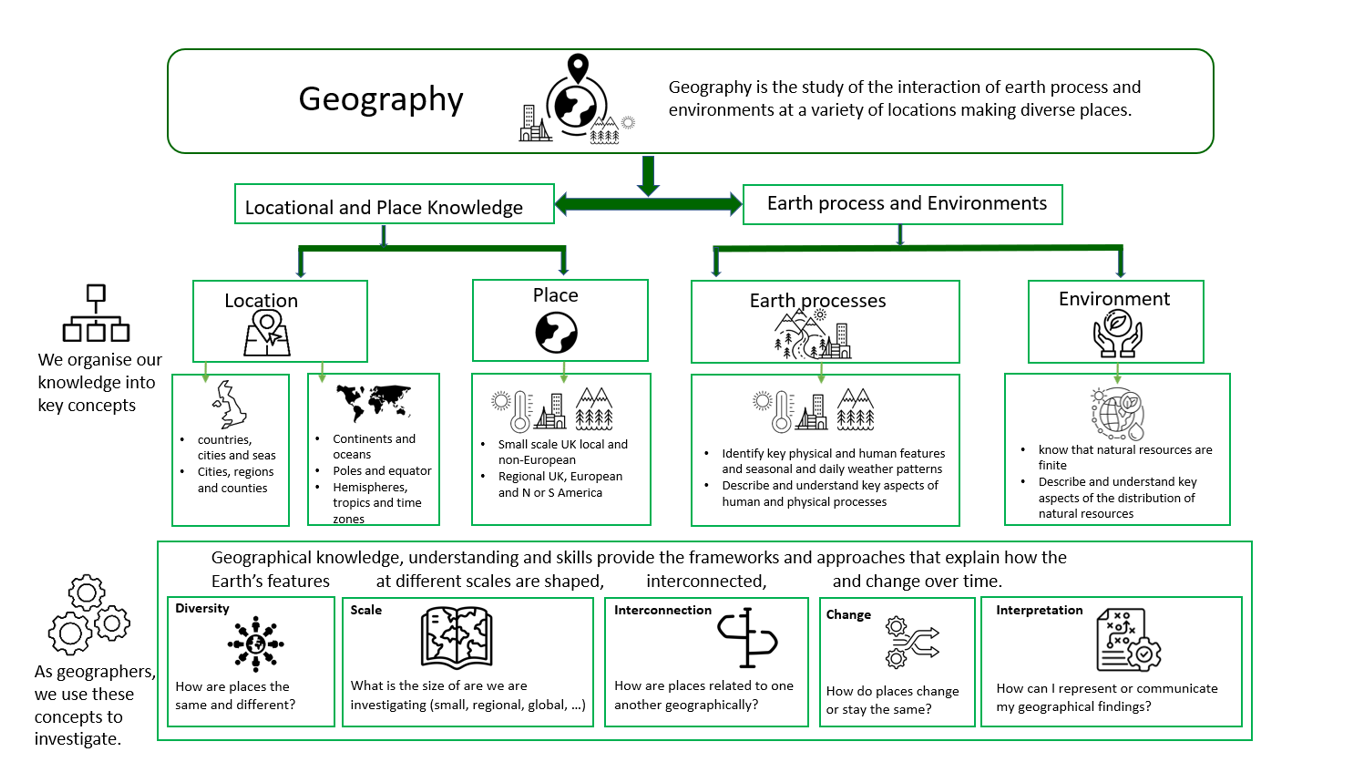
The national curriculum for Geography aims to ensure that all pupils:
- develop contextual knowledge of the location of globally significant places – both terrestrial and marine – including their defining physical and human characteristics and how these provide a geographical context for understanding the actions of processes
- understand the processes that give rise to key physical and human geographical features of the world, how these are interdependent and how they bring about spatial variation and change over time
- are competent in the geographical skills needed to:
- collect, analyse and communicate with a range of data gathered through experiences of fieldwork that deepen their understanding of geographical processes
- interpret a range of sources of geographical information, including maps, diagrams, globes, aerial photographs and Geographical Information Systems (GIS)
- communicate geographical information in a variety of ways, including through maps, numerical and quantitative skills and writing at length.